Quick answer
Metal usually costs more upfront in exchange for a longer replacement cycle and less routine concern about worn or missing shingles. Asphalt usually lowers the responsible upfront cost. Storm protection depends on the complete roof system and installation, not the material name alone.
Which choice sounds more like your situation?
- Start with asphalt: when the lowest responsible upfront cost and a familiar shingle appearance matter most.
- Compare metal first: when you expect to keep the home, want a longer replacement cycle, or want fewer exposed leak points with standing seam.
- Compare FORTIFIED with either material: when documented wind and rain protection matters more than assuming one roof covering is automatically stronger.
The decision in plain language
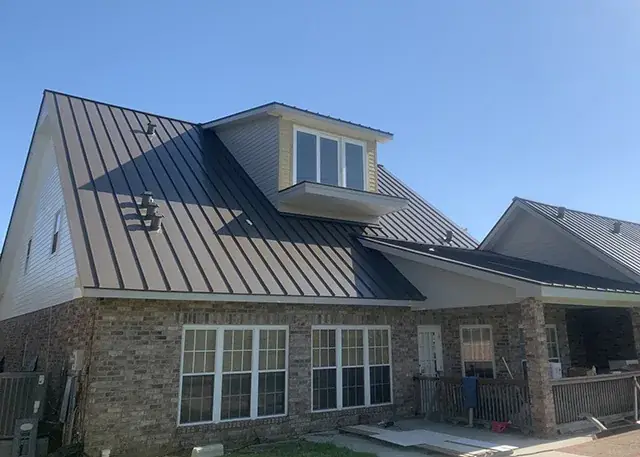
Metal roofing is usually the long-term choice. Homeowners consider it when they want strong weather resistance, less concern about curling or missing shingles, and a roof they do not expect to replace on a short cycle. The National Roofing Contractors Association notes that residential metal roofing includes both panels and shingles, and that metal can be lightweight, weather resistant, long lasting, and attractive.
Asphalt shingles are usually the lower-upfront-cost choice. They are familiar, widely available, and offered in many colors and textured architectural styles. Asphalt can make sense when the immediate budget matters more than the longest replacement cycle, or when a homeowner expects to move before receiving the full long-term value of a premium metal system.
There is no universal winner. NRCA specifically cautions that there is no single roofing material that is best for every application. Roof shape, slope, existing deck condition, local wind requirements, installation details, maintenance, and budget all matter.
Metal and asphalt compared
Use these comparisons to identify which tradeoffs deserve a detailed quote. Final performance and price depend on the exact product and the way the roof is designed and installed.
Upfront investment
- Metal roofing
- Usually higher. Standing seam and premium metal shingles require more specialized material and installation work.
- Asphalt shingles
- Usually lower. This is often the practical choice when the immediate project budget is the main constraint.
Wind and rain strategy
- Metal roofing
- Standing seam leaves fewer screw holes exposed to rain, reducing places where seals can loosen and leak over time. The panels still must be selected and attached for the wind forces at your home.
- Asphalt shingles
- The shingles must be rated and nailed for high wind, while the roof edges and water barrier beneath them help keep the covering attached and limit rain entry if shingles lift or tear away.
Maintenance and replacement cycle
- Metal roofing
- Generally selected for a longer replacement cycle and low routine upkeep. It still needs occasional checks where roof sections join, where the roof meets walls or vents, and anywhere screws remain exposed so small openings do not become leaks.
- Asphalt shingles
- Usually needs replacement sooner and can require attention after missing, lifted, cracked, or worn shingles appear.
Appearance
- Metal roofing
- Available as clean vertical standing-seam panels or metal shingles that imitate shake, slate, tile, and traditional shingles.
- Asphalt shingles
- A familiar neighborhood look with many colors, profiles, and architectural textures.
Heat and energy questions
- Metal roofing
- Do not assume every metal roof lowers cooling costs equally. Ask how much sunlight the color and finish reflect and how quickly the roof releases absorbed heat. Those are the practical meanings of solar reflectance and emittance.
- Asphalt shingles
- Color and how much sunlight the product reflects also matter. Attic insulation, climate, roof orientation, and ventilation affect the home's overall result.
Best fit
- Metal roofing
- Homeowners prioritizing long-term ownership, strong storm protection, fewer replacement cycles, and metal's appearance.
- Asphalt shingles
- Homeowners prioritizing the lowest responsible upfront cost or a familiar shingle appearance.
What matters in Gulf Coast storms
Wind does not judge a roof by the sales label. It looks for a place to lift the roof covering, and heavy rain looks for any opening left behind. That is why a quote should explain how the edges and corners stay attached, how screws and seams stay sealed, how vents and wall connections keep water out, and how the wood beneath the roof stays connected to the home.
IBHS FORTIFIED allows several kinds of roof covers, including metal and asphalt. The homeowner benefit is the same: make it harder for wind to start peeling at the edges, keep the wood roof connected to the home, and add a backup water barrier if panels or shingles are damaged. The technical proof comes from a roof covering tested for the wind forces at the home, stronger deck attachment, and a sealed roof deck.
This is also why “metal versus asphalt” should not become “good versus bad.” A carefully specified asphalt roof can be stronger than a poorly installed metal roof. A well-designed metal system can offer a longer replacement cycle and fewer exposed leak points than common shingles.
How to think about cost
Do not compare only the total at the bottom of two proposals. Ask what each price includes: removal of the old roof, replacement of damaged wood beneath the roof, the backup water barrier, protected roof edges, leak protection around walls and vents, fasteners, corrosion protection, cleanup, permits, warranties, and any FORTIFIED evaluator or documentation costs.
A lower quote may be the right quote, but only if the scope is truly comparable. A premium roof may be worth the difference for someone planning to remain in the home for decades. A responsible asphalt replacement may be the better financial choice for someone with a tighter budget. The honest answer depends on the homeowner, not only the material.
Pause before choosing a proposal if it does not clearly state:
- The exact roof covering, manufacturer, profile or shingle line, color, and installation method
- Whether tear-off, damaged wood, flashing, ventilation, permits, cleanup, and disposal are included
- How hidden damage and any price changes will be documented and approved
- The manufacturer warranty, workmanship warranty, exclusions, and who handles a future claim
- The wind-rating evidence and any FORTIFIED evaluator or documentation responsibilities
A detailed proposal does not guarantee good work, but vague scope makes it difficult to compare prices or hold anyone to the same expectations.
Questions to ask every contractor
- 1What exact material, roof style, and installation system are included in this proposal?
- 2What wind forces should this roof handle at my home, and what product rating proves it?
- 3How will you inspect and repair the wood beneath the roof before covering it?
- 4If the visible roof is damaged, what backup water barrier helps keep rain out?
- 5How will the roof edges, wall connections, vents, and screw points stay attached and sealed?
- 6How are screws and exposed metal edges protected from rust near salt air?
- 7Which parts of the warranty come from the manufacturer, and which come from the installer?
- 8Does this scope support a FORTIFIED designation, and is an independent evaluator required?
- 9What could change the price after the old roof is removed?
The bottom line
Choose metal when long-term ownership, weather resistance, low upkeep, and appearance justify the larger upfront investment. Choose asphalt when a lower responsible upfront cost is the stronger financial fit.
In either case, insist on a complete system built for the site, clear documentation, and a contractor who can explain the consequences of each detail in plain language. You can also compare TyMar's currentmetal roofing optionsandasphalt roofing servicesbefore requesting an inspection.
Keep making an informed decision
Related Gulf Coast roofing guides
Gulf Coast Hurricane Roof Checklist
Know what to inspect, document, and address before a storm, plus the safe steps to take after severe weather.
Use the hurricane roof checklistFORTIFIED Roofing Explained for Homeowners
Understand how stronger roof edges, a sealed deck, documented installation, and other details help protect your home.
Understand FORTIFIED roofingSources and further reading
This guide uses homeowner safety and roofing information from the following public authorities. Product requirements and local codes can change, so confirm the details that apply to your home before work begins.